













WATTSTUNDE
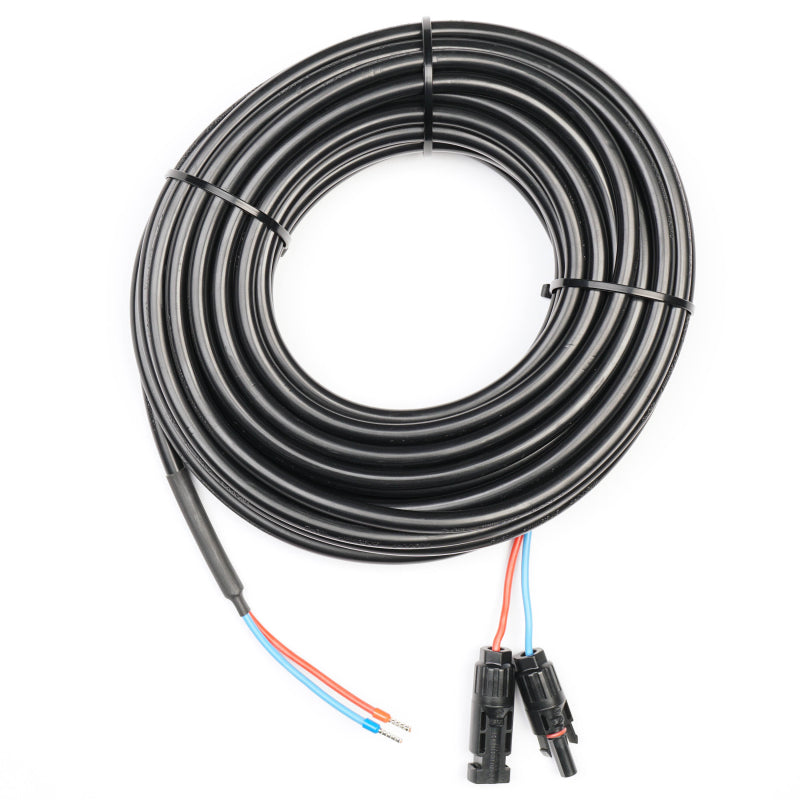
WATTSTUNDE® DAC 2.15 Connection Cable Solar Module to Charge Controller 15 Metres 2 x 2.5 mm²
WATTSTUNDE® DAC 2.15 Connection Cable – 15 m Solar Panel to Charge Controller 2 × 2.5 mm²
The WATTSTUNDE® DAC 2.15 connection cable was specially developed for a reliable connection between your solar panel and the charge controller. With a length of 15 m, it offers you ample scope for flexible installations – whether in a motorhome, on the roof, in a garden shed, or for a stationary solar system.
Thanks to MC4 connectors on the module side and crimped wire end sleeves on the controller side, the cable allows for simple, secure, and clean integration into your solar setup.
Technical Key Data at a Glance
- Cable length: 15 m
- Cable cross-section: 2 × 2.5 mm²
- Side 1: MC4 connector (module side)
- Side 2: Crimped wire end sleeves (controller side)
- For connecting solar panel and charge controller
Simple & Secure Connection
The MC4 connectors enable a quick and weather-resistant connection to your solar panel. On the other side, wire end sleeves are professionally crimped, allowing you to cleanly integrate the cable into the terminals of your charge controller.
Efficient Power Transmission with 2.5 mm²
- Efficient power transmission
- Reduced power loss
- Reliable operation of your solar system
- Suitable for many 12 V and 24 V systems
Robust & Weather-Resistant
The connection cable is resistant to weather influences and UV radiation and is ideally suited for permanent outdoor installations.
Your Advantages at a Glance:
- 15 m length for flexible installations
- 2 × 2.5 mm² for efficient power transmission
- MC4 connectors for easy module connection
- Crimped wire end sleeves for secure controller connection
- Robust, UV-resistant design
- Warranty period: 2 years
Maximum Efficiency for Your Solar System
With the WATTSTUNDE® DAC 2.15 connection cable, you create a secure and durable connection between your solar panel and charge controller.
This product has clear ecological advantages in use or manufacturing.
This product has clear ecological advantages in use or manufacturing.
This product has clear ecological advantages in use or manufacturing.
This product has clear ecological advantages in use or manufacturing.
This product has clear ecological advantages in use or manufacturing.
This product has clear ecological advantages in use or manufacturing.
This product has clear ecological advantages in use or manufacturing.
This product has clear ecological advantages in use or manufacturing.
This product has clear ecological advantages in use or manufacturing.
This product has clear ecological advantages in use or manufacturing.
This product has clear ecological advantages in use or manufacturing.
This product has clear ecological advantages in use or manufacturing.
This product has clear ecological advantages in use or manufacturing.
This product has clear ecological benefits in use or production.
This product has clear ecological benefits in use or production.
This product has clear ecological benefits in use or production.
This product has clear ecological benefits in use or production.
This product has clear ecological benefits in use or production.
This product has clear ecological benefits in use or production.
This product has clear ecological benefits in use or production.